





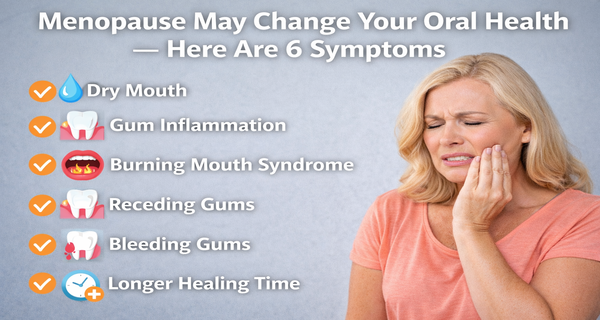
Menopause may lead to oral issues such as burning mouth syndrome, gum inflammation, tooth sensitivity, and oral thrush. Fortunately, most of these conditions can be managed with proper oral care, medication, or home treatments.
Menopause is commonly linked to symptoms such as hot flashes, night sweats, and mood changes. However, many people don’t realize that menopause can also affect oral health.
As hormone levels decline, bone density throughout the body can decrease — including in the jawbones that support the teeth. Reduced estrogen may also impact blood circulation to the gums, increasing the risk of bleeding, gum recession, loose teeth, and other oral concerns.
Burning mouth syndrome (BMS)
Burning mouth syndrome involves a persistent burning sensation affecting the soft tissues inside the mouth and typically lasts at least 4 to 6 months.
Common sensations
People with BMS may experience feelings of:
- heat
- tenderness
- tingling
- numbness
Symptoms may develop slowly or appear suddenly, sometimes starting as mild tingling before intensifying. While the lips, palate, and sides of the tongue may be involved, the tip of the tongue is most often affected. Taste and saliva production may or may not be impacted.
BMS is classified into three types based on symptom patterns:
- Type 1: Little or no pain upon waking, with symptoms worsening throughout the day and peaking in the evening.
- Type 2: Constant pain that persists day and night, sometimes disrupting sleep and contributing to anxiety.
- Type 3: Intermittent pain with symptom-free periods. Food sensitivities or allergies may worsen discomfort in this type.
Treatment options
Treatment depends on whether another underlying issue, such as a nutrient deficiency, is contributing to symptoms.
For menopause-related BMS, some healthcare providers may suggest menopausal hormone therapy (MHT), though its effectiveness remains uncertain.
Other possible treatments include:
- tricyclic antidepressants like amitriptyline or nortriptyline
- sedatives such as clonazepam or chlordiazepoxide
- mood stabilizers like gabapentin
Finding an effective treatment plan may require trying several options.
Home remedies are limited, but some anecdotal evidence suggests that capsaicin applied to the affected area may help reduce nerve-related pain by desensitizing tissues.
Oral thrush
Oral thrush is a fungal infection caused by an overgrowth of Candida albicans, a yeast that naturally exists in the body.
Hormonal fluctuations during menopause may allow this fungus to multiply excessively.
Signs and symptoms
Oral thrush often appears as white patches inside the mouth, especially on the tongue and inner cheeks. Other symptoms may include:
- raised, cottage cheese–like lesions
- mouth or throat soreness
- difficulty swallowing
- redness or discoloration around the mouth
- cracking at the corners of the lips
- altered or lost taste
Treatment
Healthcare providers typically prescribe antifungal medications, such as:
- clotrimazole lozenges
- liquid antifungals like nystatin, itraconazole, or posaconazole
- oral tablets such as fluconazole
Symptoms often resolve within two weeks but may return.
At-home care may include:
- rinsing with warm saltwater
- brushing twice daily and flossing once daily
- replacing toothbrushes frequently during treatment
If symptoms persist or worsen, medical advice is recommended.
Dry mouth
Dry mouth occurs when the body produces insufficient saliva, which plays a key role in digestion and maintaining healthy oral bacteria.
Menopause can alter saliva composition, disrupting the mouth’s microbiome and increasing the risk of cavities and infections.
Other contributing factors include:
- mouth breathing or snoring
- alcohol use
- smoking or vaping
- certain medications
- cancer treatments
- conditions like diabetes or neurological disorders
- nerve damage to the head or neck
Symptoms
Dry mouth may feel sticky, tingly, or burning. It can also cause:
- bad breath
- cracked lips
- mouth sores
- difficulty chewing, swallowing, or speaking
Management
Mild cases may improve with:
- drinking more water
- avoiding spicy or salty foods
- reducing caffeine intake
- chewing sugar-free gum
- using xylitol-based dental products
- running a humidifier
Frequent symptoms may require prescription medications that stimulate saliva production.
Tooth sensitivity or pain
Estrogen helps slow bone breakdown. When estrogen levels drop during menopause, bone loss can accelerate — including in the jaw.
Possible effects
Reduced bone density may lead to:
- loose teeth
- cavities
- tooth loss
Thinning oral tissues may also increase pain sensitivity, especially when consuming hot, cold, or acidic foods. Over time, enamel erosion can expose tooth nerves.
Treatment
Occasional sensitivity is common, but ongoing pain warrants a dental visit.
Dentists may recommend:
- soft-bristled toothbrushes
- fluoride toothpaste
- alternating with desensitizing toothpaste
Using a straw for acidic drinks and ensuring adequate calcium and vitamin D intake may also help protect teeth.
Changes in taste
Taste changes may occur with aging, but menopause-related dry mouth and tissue changes can further impair taste perception.
Symptoms
Some people notice metallic, bitter, or salty flavors without an obvious cause, while others experience reduced taste altogether.
What may help
- using non-metal utensils
- cooking with glass or ceramic cookware
- adjusting flavors with herbs, spices, or acidic ingredients
Persistent or sudden taste changes should be evaluated by a healthcare professional.
Inflamed or bleeding gums
Gum inflammation during menopause may stem from hormonal changes or inadequate oral hygiene.
Possible causes
- Menopausal gingivostomatitis: causes red, pale, shiny, or easily bleeding gums and may include mouth sores
- Gingivitis: a mild form of gum disease caused by plaque buildup, leading to irritation and gum recession
Without treatment, both conditions can progress to periodontitis and tooth loss.
Treatment
Improving oral hygiene is key:
- brush twice daily
- floss daily
- use therapeutic mouthwash
- schedule regular dental cleanings
Supporting oral health during menopause
Good habits can help prevent or reduce oral complications:
- brush after meals with a soft toothbrush
- floss daily
- replace toothbrushes every 3–4 months
- clean dental appliances regularly
Avoiding foods that trigger irritation — such as spicy, salty, or sour items — may also reduce discomfort. Tracking symptoms alongside diet can help identify triggers.
When to seek professional care
Consult a dentist or healthcare provider if oral symptoms affect daily life. Immediate care is needed for:
- difficulty swallowing
- cracked or loose teeth
- heavy or persistent bleeding
Early treatment lowers the risk of complications.
Key takeaway
Menopause can affect more than hormones — it can influence oral health as well. Teeth, gums, inner cheeks, and taste buds may all be impacted.
Common issues include dry mouth, burning mouth syndrome, oral thrush, gum inflammation, tooth sensitivity, and taste changes. Most are manageable with proper care, treatment, or home strategies.
If oral symptoms interfere with everyday activities, seeking professional guidance is essential.