





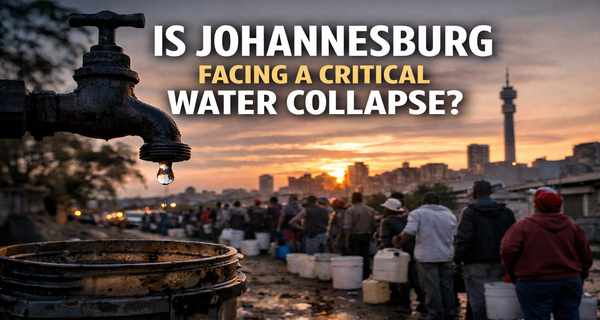
South Africa isn’t just facing a water problem — we’re heading toward a full-scale water emergency. The warning signs have been there for years, and now time is running out.
We are among the 30 driest countries on earth, yet we consume around 218 litres of water per person every day — far above the global average of 173 litres.
Water quality is deteriorating fast. In 2014, only 5% of systems failed basic microbiological standards. Today, that number has surged to 46%, and overall reliability has dropped to just 68%.
Even more alarming? Nearly half of municipal water — 47.4% — never reaches households. It’s lost through leaking pipes, outdated infrastructure, poor management, and unpaid accounts.
This isn’t just an infrastructure issue. It’s a governance crisis. It’s a sustainability crisis. It’s a national warning sign.
We cannot solve this alone. South Africa needs stronger public-private partnerships, serious investment, and a fundamental shift in how we value and protect water — because in a country this dry, water should be treated like gold. 💧
In his 2026 State of the Nation Address, President Cyril Ramaphosa acknowledged something millions of South Africans already know: water has become one of the country’s most urgent challenges. And truthfully, it has been for years.
From Johannesburg to Knysna to Giyani, communities are voicing growing frustration over unreliable access to a service that is not a privilege, but a constitutional right.
The announcement of a National Water Crisis Committee, led by the president himself, shows that the issue has finally been elevated to the highest level of national priority. The pledge of R156-billion over the next three years for water and sanitation infrastructure — along with promises of tighter accountability and legislative reform — reflects an understanding that the current situation cannot continue.
This is a significant moment.
However, whether it becomes a genuine turning point — rather than just another chapter in a long history of reform attempts — will depend entirely on how the response is structured and implemented.
The legal framework is largely already in place, and amendments have been proposed. But adjusting legislation alone will not fix the deep-rooted service delivery crisis the country faces. Real change will require execution, oversight, capacity, and political will — not just policy on paper.